

Vancouver’s winters are usually wet and mild, until they aren’t. The mid-January 2024 ice storms left tens of thousands of people in Clark County without power for days, with temperatures dropping as low as 13 degrees, and a February 2025 storm put roughly 20,000 households through outages on a single morning. For an HOA board, storms like these test whether the association knows what it owns, what it has to maintain, and who to call. Waiting for the first storm to find out is waiting too long.
Key Takeaways
The City of Vancouver says HOAs are likely responsible for private stormwater facilities in their neighborhoods, and it won’t accept a cleaning receipt in place of an inspection report for underground systems.
Winter here can be severe, not just rainy, as the January 2024 ice storms showed, with outages and tree damage across Clark County.
Irrigation systems must have an approved backflow assembly tested annually by a certified tester, and those assemblies need draining or insulating before the first hard freeze.
Snow and ice responsibilities should be settled in writing and in vendor contracts before the first storm, not during it.
Dated inspection records and minutes are the practical evidence that a board acted with reasonable diligence.
Start With Stormwater, Because It’s Probably Yours
Many Vancouver neighborhoods have private stormwater ponds, swales, catch basins, or underground systems. The City of Vancouver’s private stormwater page says that if a private facility serves your neighborhood, your HOA or the property owners in the development are likely responsible for its care and maintenance, and that the state requires inspections. The city also expects records. Its inspection log is meant to stay on site and be available to city staff on request. Underground systems add a wrinkle: inspection is different from cleaning, often involves specialized camera equipment, and a cleaning receipt cannot stand in for an inspection report. The city publishes maintenance checklists for catch basins, bioretention facilities, and grass swales, which give boards and vendors a concrete scope of work. Fall leaf drop makes this the right moment to clear inlets before the heaviest rain, and the eventual replacement cost of these facilities belongs in your reserve planning, which is why Washington’s expanded reserve study requirement matters here too.
Trees: Ice and Wind Find the Weak Ones
On January 13, 2024, a winter storm brought gusts of 35 to 55 miles per hour, and Clark County Public Works told residents the safest place was indoors, away from trees. Days later, the National Weather Service warned that power outages and tree damage were likely because of the ice. A fall walk-through of the common areas is the simplest defense: entries, greenbelts, play areas, parking, and anything near buildings, fences, or power lines. Look for dead or leaning trees, split trunks, hanging limbs, and heaving roots, and have a certified arborist evaluate anything questionable. Check your CC&Rs on who is responsible for trees on individual lots versus common elements, and prioritize by what a failure would hit: people, vehicles, and structures first.
Irrigation and Plumbing: Drain Before the Freeze
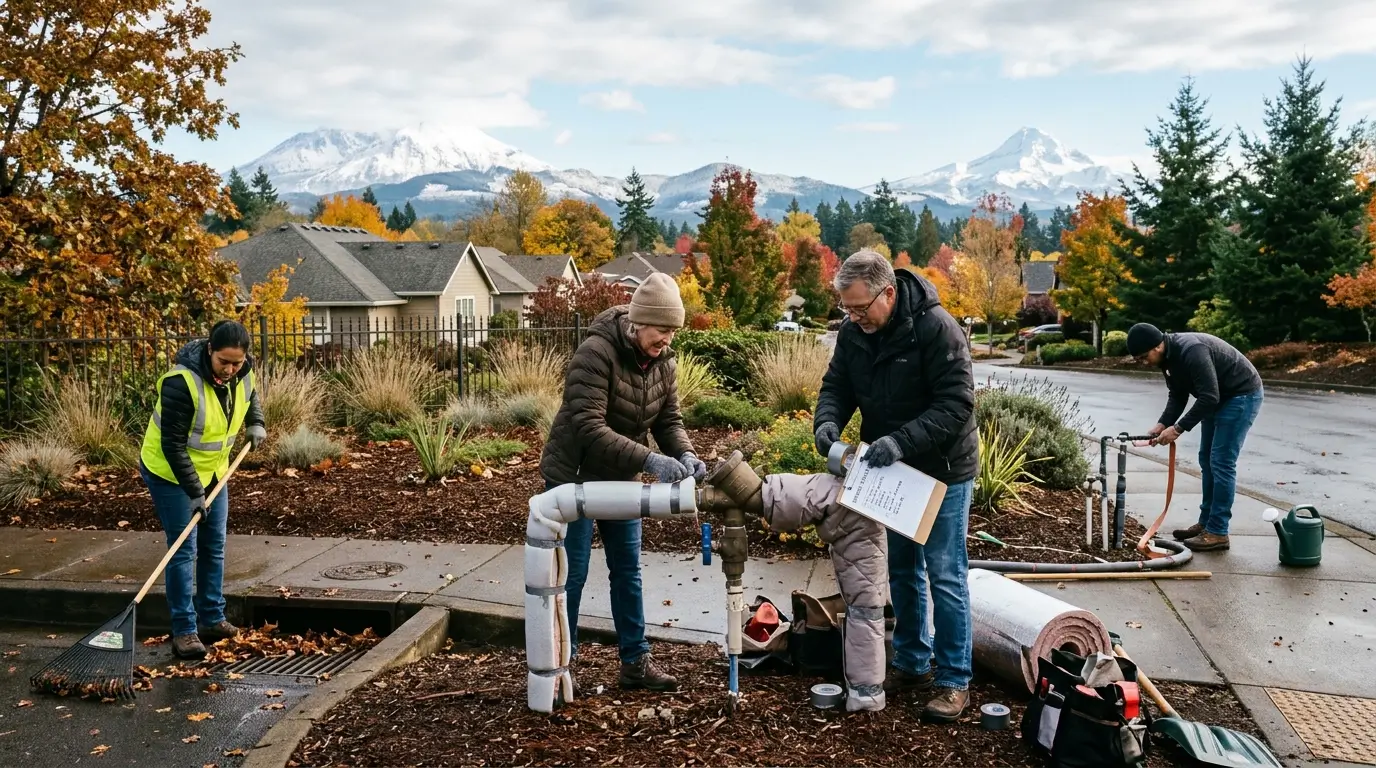
Freeze damage to irrigation and plumbing is one of the most avoidable winter losses. The City of Vancouver says irrigation systems must have approved backflow protection and that the assembly needs annual testing by a Washington State certified tester, a requirement Clark Public Utilities also describes. Winterizing protects those assemblies: shut off the irrigation supply, drain the lines, set controllers to off, and insulate any above-ground backflow assembly. A licensed irrigation contractor should handle it, scheduled well before the first hard freeze rather than the week one is forecast. Don’t overlook clubhouses, restrooms, and pool equipment rooms, where an unheated pipe can split in a cold snap, and make sure someone on the board or at the management company knows where every shutoff valve is.
Lighting, Walkways, and Snow and Ice
Shorter days make lighting a safety item, not an amenity. Walk the common paths, stairs, mailbox areas, and parking at dusk, replace dead fixtures, and confirm timers and photocells are set correctly. Fix trip hazards like lifted pavers or root-heaved sidewalk before ice hides them. Then decide your snow and ice policy before the forecast forces the issue: which routes the association will clear, what depth triggers service, what de-icer is acceptable on concrete and plantings, and what owners remain responsible for. Put the vendor agreement in place in advance, since a contractor is easier to line up in October than during a storm, and tell owners in writing what the association will and won’t do.
Plan for Outages and Communication
A storm is the wrong time to discover that nobody has the vendor’s after-hours number. Keep an updated contact sheet covering board members, management, arborists, plumbers, electricians, and snow vendors, and decide in advance how you’ll reach owners, whether by email, an owner portal, or posted notices. Make sure the board knows how to report outages to Clark Public Utilities and how to reach the county or city for downed trees and road issues. A short pre-storm message to owners, covering what the association is doing and what they should handle themselves, heads off a lot of calls.
Document Everything, It’s the Board’s Best Protection
A checklist only helps if there’s a record behind it. Date every inspection, keep arborist reports and invoices, log stormwater inspections the way the city expects, and record board decisions in the minutes, including any decision to defer a repair and the reasoning. As we covered in our guide to board member liability and D&O insurance, Washington’s business judgment rule generally protects good-faith decisions made with reasonable diligence and within a board’s authority, and a written trail is the practical evidence of that diligence. Maintaining common grounds and buildings is also one of the core duties we outline in our overview of what an HOA board does. This is general information rather than legal advice, so confirm specifics with your association’s attorney.
FAQ
Is my HOA responsible for stormwater ponds and catch basins?
The City of Vancouver says that if a private stormwater facility serves your neighborhood, the HOA or property owners in the development are likely responsible for its maintenance. Check your plat, covenants, and recorded documents, or ask the city.
Is cleaning enough, or do I need an inspection?
The city says inspection is required by the state and that, for underground facilities, a cleaning receipt cannot be accepted in place of an inspection report.
When should irrigation be winterized?
Before the first hard freeze. The backflow assembly also needs annual testing by a certified tester under city and state requirements.
Does documenting inspections actually matter?
Yes. Dated logs, vendor reports, and minutes show the board acted with reasonable diligence, which is the standard Washington’s business judgment rule looks for. Confirm details with the association’s attorney.
Finishing the Checklist Before the Weather Forces It
None of these tasks is difficult on its own. The risk is that a volunteer board spreads them across a dozen to-do lists and meets the first ice storm with half of them undone. If your board would rather not carry this checklist on volunteer time, our community association management team can schedule the inspections, line up vendors, and keep the records in one place.